
The Madaxeman
Madaxeman.com's Home Page
  • Home
  • Latest Posts
  • Links Page
  • Battle Reports
  • ADLG Index
  • ADLG Wiki
  • Malifaux
  • C London Club
  • 15mm Gallery
  • 15mm Suppliers
  • Facebook
  • The Podcast
  • 10mm
  • Consent Preferences
 RSS Feed

Madaxemans 10mm & Real World Photo Gallery

Photos from museums, and from my 10mm wargaming collection

  • Home
  • Login
  • Album list
    • Last uploads
    • Last comments
    • Most viewed
    • Top rated
    • By date
    • My Favorites
  • Search

The 10mm & Real World Museums Photo Directory - helping you choose the best 10mm tanks, or dig out real cammo schemes from tanks and other military vehicles in museums and shows around the world. You can also search the directory by manufacturer, army or keyword

Anyone can rate the photos just by clicking on the stars beneath each photo. Ratings use a scale of 0-5 where 5 = excellent and 0 = terrible.

Home > Museums and Shows > Bovington

Most viewed - Bovington
IMGP0620.JPG
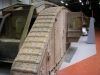
WW1 British tanks311 views The environment inside was extremely unpleasant; since ventilation was inadequate, the atmosphere was contaminated with poisonous carbon monoxide, fuel and oil vapours from the engine, and cordite fumes from the weapons.
PICT1827.JPG
T62311 viewsThe T-62 uses torsion bar suspension. It has five pairs of rubber-tired roadwheels, a drive sprocket at the rear and idler at the front on each side, with no return rollers. The first and last roadwheels each have a hydraulic shock absorber. The tank is powered by the V-55 12-cylinder 4-stroke one-chamber 38.88 litre water-cooled diesel engine developing 581 hp (433 kW) at 2,000 rpm
PICT1851.JPG
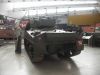
Allied armoured cars of WW2311 views
IMGP0594.JPG
Sherman309 viewsThe M4 Sherman, formally Medium Tank, M4, was the primary tank used by the United States during World War II. Thousands were also distributed to the Allies, including the British Commonwealth and the Soviet Union, via lend-lease. In the United Kingdom, the M4 was named after Union General William Tecumseh Sherman, following the British practice of naming their American-built tanks after famous American Civil War generals. Subsequently, the British name found its way into common use in the U.S.
IMGP0621.JPG
WW1 British tanks309 viewsThe first tanks were known as the Mark I after the subsequent designs were introduced. Mark Is armed with two 6 pounder guns and three 8 mm Hotchkiss machine guns were called "Male" tanks, and those with four Vickers machine guns and one Hotchkiss, were called "Female". Swinton is credited with inventing the terms. To aid steering, a pair of large wheels were added behind the tank. These were not as effective as hoped and were subsequently dropped.
PICT1788.JPG
Sherman309 viewsThe Army had seven main sub-designations for M4 variants during production: M4, M4A1, M4A2, M4A3, M4A4, M4A5, and M4A6. These designations did not necessarily indicate linear improvement: for example, A4 was not meant to indicate it was better than the A3. These sub-types indicated standardized production variations, which were in fact often manufactured concurrently at different locations
IMGP0589.JPG
Matilda I308 viewsThe Tank, Infantry, Mk I, Matilda I (A11)[1] was a British infantry tank of the Second World War. It is not to be confused with the later model Tank, Infantry Mk II (A12), also known as the "Matilda II" which took over the "Matilda" name after the early part of the war when the first Matilda was withdrawn from combat service. They were of totally different design and did not share components, but did have some similar traits because they were both designed to be infantry tanks, a type of tank that tended to sacrifice speed for increased armour protection.
IMGP0588.JPG
Pz I Command tank308 viewsBetween 1934 and the mid-1940s several variants of the Panzer I were designed, especially during the later years of its combat history. Because they were obsolescent from their introduction, incapable of defeating foreign armor, and outclassed by newer German tanks, the Panzer I chassis were increasingly repurposed as tank destroyers and other variants. One of the most well known variants was the kleiner Panzerbefehlswagen ("small armored command vehicle"), built on the Ausf. A and Ausf. B chassis
PICT1707.JPG
Little Willie308 viewsLittle Willie was a prototype in the development of the British Mark I tank. Constructed in the autumn of 1915 at the behest of the Landships Committee, it was the first completed tank prototype in history. Little Willie is the oldest surviving individual tank, preserved as one of the most famous pieces in the collection of the British Bovington Tank Museum.
PICT1822.JPG
Scorpion308 viewsAlvis built more than 3,000 Scorpion vehicles for the British Army and Royal Air Force Regiment and the export market. All the CVR(T) vehicles were to be air-portable and two Scorpions could be carried in a C130 Hercules. Another requirement of the CVR(T) project was the low ground pressure - similar to that of a soldier on foot - and this would serve it well in the boggy conditions of the Falklands War.
270 files on 27 page(s) 1 - 8 9 10 11 12 13 14 15 16 17 - 27


Visit Madaxeman on

Youtube Logo
Blogger Logo
Facebook Logo
Podbean Logo
Twitter Logo
Spotify Logo
Pinterest Logo
iTunes Logo
Tune In Logo

Podcasts to download from Madaxeman.com

(Also available on Podbean, iTunes and Spotify)


(These are "affiliate links". If you buy something after clicking on them I get a small kickback from eBay)

Page Loads for the 10mm & Museums Gallery:

About This Site & Privacy Information

Powered by Coppermine Photo Gallery