
The Madaxeman
Madaxeman.com's Home Page
  • Home
  • Latest Posts
  • Links Page
  • Battle Reports
  • ADLG Index
  • ADLG Wiki
  • Malifaux
  • C London Club
  • 15mm Gallery
  • 15mm Suppliers
  • Facebook
  • The Podcast
  • 10mm
  • Consent Preferences
 RSS Feed

Madaxemans 10mm & Real World Photo Gallery

Photos from museums, and from my 10mm wargaming collection

  • Home
  • Login
  • Album list
    • Last uploads
    • Last comments
    • Most viewed
    • Top rated
    • By date
    • My Favorites
  • Search

The 10mm & Real World Museums Photo Directory - helping you choose the best 10mm tanks, or dig out real cammo schemes from tanks and other military vehicles in museums and shows around the world. You can also search the directory by manufacturer, army or keyword

Anyone can rate the photos just by clicking on the stars beneath each photo. Ratings use a scale of 0-5 where 5 = excellent and 0 = terrible.

Home > Museums and Shows > Bovington

Most viewed - Bovington
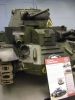
IMGP0598.JPG
Cruiser, Mk I (A9)173 viewsThe Tank, Cruiser, Mk I (A9) was a British cruiser tank of the interwar period. It was the first cruiser tank: a fast tank designed to bypass the main enemy lines and engage the enemy's lines of communication, along with enemy tanks. The Cruiser Mk II was a heavier armoured adaptation of the Mark I developed at much the same time.
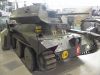
PICT1737.JPG
Mk IV A13 Mk II173 viewsThe Tank, Cruiser, Mk IV (A13 Mk II) was a British cruiser tank of the Second World War. It followed directly on from the Tank, Cruiser, Mk III (A13 Mk I). The first Mk IVs were Mk IIIs with extra armour fitted to the turret. Later Mk IVAs were built with the complete extra armour.
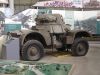
PICT1796.JPG
Humber Armoured Car173 viewsThe Humber Armoured Car was one of the most widely produced British armoured cars of the Second World War. It supplemented the Humber Light Reconnaissance Car and remained in service until the end of the war.
PICT1762.JPG
Matilda II172 viewsThe tank's suspension system was that which had been developed by Vickers for their Medium C prototype in the mid-1920s.[22] The tank was carried by five double wheel bogies on each side. Four of the bogies were on bellcranks in pairs with a common horizontal coil spring. The fifth, rearmost, bogie was sprung against a hull bracket. Between the first bogie and the idler wheel was a larger diameter vertically sprung "jockey wheel"
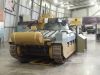
PICT1778.JPG
Panther172 viewsThe Panther's excellent combination of firepower, mobility, and protection served as a benchmark for other nations' late war and post-war tank designs, and it is regarded as one of the best tanks of World War II
PICT1783.JPG
Panther172 viewsThe Panther was a direct response to the Soviet T-34 and KV-1 tanks. First encountered on 23 June 1941, the T-34 outclassed the existing Panzer III and IV At the insistence of General Heinz Guderian, a special Panzerkommision was dispatched to the Eastern Front to assess the T-34 mong the features of the Soviet tank considered most significant were the sloping armor, which gave much improved shot deflection and also increased the effective armor thickness against penetration, the wide track, which improved
PICT1844.JPG
BRDM 2 172 viewsThe BRDM-2 literally "Combat Reconnaissance/Patrol Vehicle" †[4]) is an amphibious armoured patrol car used by Russia and the former Soviet Union. It was also known under designations BTR-40PB, BTR-40P-2 and GAZ 41-08. This vehicle, like many other Soviet designs, has been exported extensively and is in use in at least 38 countries.
IMGP0577.JPG
Goliath171 viewsThe Goliath tracked mine - complete German name: Leichter Ladungsträger Goliath (Sd.Kfz. 302/303a/303b) - was a remote controlled German-engineered demolition vehicle, also known as the beetle tank Employed by the Wehrmacht during World War II, this caterpillar-tracked vehicle was approximately 4 feet (1.2 m) long, 2 feet (0.61 m) wide, and 1 foot (0.30 m) tall. It carried 75–100 kilograms (170–220 lb) of high explosives and was intended to be used for multiple purposes, such as destroying tanks, disrupting dense infantry formations, and demolition of buildings and bridges.
IMGP0621.JPG
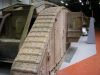
WW1 British tanks171 viewsThe first tanks were known as the Mark I after the subsequent designs were introduced. Mark Is armed with two 6 pounder guns and three 8 mm Hotchkiss machine guns were called "Male" tanks, and those with four Vickers machine guns and one Hotchkiss, were called "Female". Swinton is credited with inventing the terms. To aid steering, a pair of large wheels were added behind the tank. These were not as effective as hoped and were subsequently dropped.
PICT1718.JPG
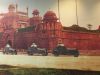
Armoured cars in Delhi171 viewsRead about them on a dedicated CRossley site
270 files on 27 page(s) 1 - 12 13 14 15 16 17 18 19 20 21 - 27


Visit Madaxeman on

Youtube Logo
Blogger Logo
Facebook Logo
Podbean Logo
Twitter Logo
Spotify Logo
Pinterest Logo
iTunes Logo
Tune In Logo

Podcasts to download from Madaxeman.com

(Also available on Podbean, iTunes and Spotify)


(These are "affiliate links". If you buy something after clicking on them I get a small kickback from eBay)

Page Loads for the 10mm & Museums Gallery:

About This Site & Privacy Information

Powered by Coppermine Photo Gallery