
The Madaxeman
Madaxeman.com's Home Page
  • Home
  • Latest Posts
  • Links Page
  • Battle Reports
  • ADLG Index
  • ADLG Wiki
  • Malifaux
  • C London Club
  • 15mm Gallery
  • 15mm Suppliers
  • Facebook
  • The Podcast
  • 10mm
  • Consent Preferences
 RSS Feed

Madaxemans 10mm & Real World Photo Gallery

Photos from museums, and from my 10mm wargaming collection

  • Home
  • Login
  • Album list
    • Last uploads
    • Last comments
    • Most viewed
    • Top rated
    • By date
    • My Favorites
  • Search

The 10mm & Real World Museums Photo Directory - helping you choose the best 10mm tanks, or dig out real cammo schemes from tanks and other military vehicles in museums and shows around the world. You can also search the directory by manufacturer, army or keyword

Anyone can rate the photos just by clicking on the stars beneath each photo. Ratings use a scale of 0-5 where 5 = excellent and 0 = terrible.

Home > Museums and Shows > Bovington

Most viewed - Bovington
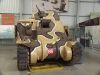
PICT1766.JPG
Lee/Grant170 viewsBritish Lees and Grants were in action against Rommel's forces at the disastrous Battle of Gazala on 27 May that year. They continued to serve in North Africa until the end of that campaign. A regiment of M3 Mediums was also used by the U.S. 1st Armored Division in North Africa. In the North African campaign, the M3 was generally appreciated for its mechanical reliability, good armor and heavy firepower.
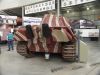
PICT1780.JPG
Panther170 viewsThe Panther tank was a compromise of various requirements. While having essentially the same engine as the Tiger I tank, it had better frontal armor (including the benefit of a sloped armor, increasing effective armor depth), better gun penetration, was lighter and thus faster, and could traverse rough terrain better than the Tigers. The tradeoff was weaker side armor.
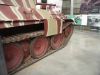
PICT1779.JPG
Panther170 viewsUntil 1944, it was designated as the Panzerkampfwagen V Panther and had the ordnance inventory designation of Sd.Kfz. 171. On 27 February 1944, Hitler ordered that the Roman numeral V be deleted from the designation.
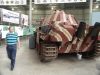
PICT1781.JPG
Panther170 viewsThe Panther proved to be deadly in open country and long range engagements, but vulnerable in close-quarters combat. Also, the 75 mm gun fired a slightly smaller shell than the Tiger's 88 mm gun, providing less high explosive firepower against infantry.
PICT1792.JPG
Cromwell170 viewsThe Cromwell and the related Centaur were the product of further development of British cruiser tanks, and they were designed as the replacement for the Crusader tank, which although not yet in service would become obsolete in time. In late 1940, the General Staff set out the specifications for the new tank, and designs were submitted in early 1941. The tank would be fitted with the QF 6 pounder gun with the expectation that it would enter service in 1942.
IMGP0575.JPG
M-22 Locust169 viewsThe Light Tank (Airborne) M22 or Locust was an American-designed airmobile light tank which was produced during World War II. The Locust began development in 1941 after the British War Office requested that the American government design a purpose-built airborne light tank which could be transported by glider into battle to support British airborne forces. The War Office had originally selected the Light Tank Mark VII Tetrarch light tank for use by the airborne forces, but it had not been designed with that exact purpose in mind so the War Office believed that a purpose-built tank would be required to replace it
IMGP0618.JPG
WW1 British tanks169 viewsThe Mark I entered service in August 1916, and was first used in action on the morning of 15 September 1916 during the Battle of Flers-Courcelette, part of the Somme Offensive. With the exception of the few interim Mark II and Mark III tanks, it was followed by the largely similar Mark IV, which first saw combat in June 1917. The Mark IV was used en masse at the Battle of Cambrai in November 1917 The Mark V, with its much improved transmission, entered service in mid-1918.
PICT1726.JPG
Vickers Mk E Tank169 viewsThe Vickers 6-Ton Tank or Vickers Mark E was a British light tank designed as a private project at Vickers. It was not purchased by the British Army, but was picked up by a large number of foreign armed forces and was copied almost exactly by the Soviets as the T-26. It was also the direct predecessor of the Polish 7TP tank. By the start of World War II it was the second most common tank design in the world after the Renault FT.
PICT1734.JPG
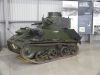
Mk VI169 viewsThe Tank, Light, Mk VI was a British light tank, produced by Vickers-Armstrongs in the late 1930s, which saw service during World War II. The Tank, Light, Mk VI was the sixth in the line of light tanks built by Vickers-Armstrongs for the British Army during the interwar period. The company had achieved a degree of standardization with their previous five models, and the Mark VI was identical in all but a few respects
PICT1750.JPG
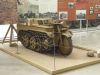
Kettenrad169 viewsThe SdKfz 2, better known as the Kleines Kettenkraftrad HK 101 or Kettenkrad for short (Ketten = tracks, krad = military abbreviation of the German word Kraftrad, the administrative German term for motorcycle), started its life as a light tractor for airborne troops.
270 files on 27 page(s) 1 - 14 15 16 17 18 19 20 21 22 23 - 27


Visit Madaxeman on

Youtube Logo
Blogger Logo
Facebook Logo
Podbean Logo
Twitter Logo
Spotify Logo
Pinterest Logo
iTunes Logo
Tune In Logo

Podcasts to download from Madaxeman.com

(Also available on Podbean, iTunes and Spotify)


(These are "affiliate links". If you buy something after clicking on them I get a small kickback from eBay)

Page Loads for the 10mm & Museums Gallery:

About This Site & Privacy Information

Powered by Coppermine Photo Gallery