
The Madaxeman
Madaxeman.com's Home Page
  • Home
  • Latest Posts
  • Links Page
  • Battle Reports
  • ADLG Index
  • ADLG Wiki
  • Malifaux
  • C London Club
  • 15mm Gallery
  • 15mm Suppliers
  • Facebook
  • The Podcast
  • 10mm
  • Consent Preferences
 RSS Feed

Madaxemans 10mm & Real World Photo Gallery

Photos from museums, and from my 10mm wargaming collection

  • Home
  • Login
  • Album list
    • Last uploads
    • Last comments
    • Most viewed
    • Top rated
    • By date
    • My Favorites
  • Search

The 10mm & Real World Museums Photo Directory - helping you choose the best 10mm tanks, or dig out real cammo schemes from tanks and other military vehicles in museums and shows around the world. You can also search the directory by manufacturer, army or keyword

Anyone can rate the photos just by clicking on the stars beneath each photo. Ratings use a scale of 0-5 where 5 = excellent and 0 = terrible.

Home > Museums and Shows > Bovington

Most viewed - Bovington
PICT1736.JPG
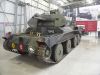
Mk IV A13 Mk II277 viewsThe A13 MkII, Cruiser Tank Mk IV, had a maximum armour thickness of 30 mm, and faceted armour was mounted on the original turret's sides and rear. This gave the tank a far more modern appearance. Some Mk III tanks were re-built to Mk IV standard while at the factory.
PICT1802.JPG
Churchill Crocodile277 viewsThe thrower had a range of up to 120 yards (some sources quote 150 yards). The pressure required had to be primed on the trailer by the crew as close to use as feasible, because pressure could not be maintained for very long. The fuel was used at 4 gallons per second; refuelling took at least 90 minutes and pressurization around 15 minutes. The fuel burned on water and could be used to set fire to woods and houses. The flamethrower could project a "wet" burst of unlit fuel which would splash around corners
PICT1841.JPG
Sv 203 S Tank277 viewsThe Strv 103 was developed in the 1950s and was the first main battle tank to use a turbine engine. The result was a very low-profile design with an emphasis on defense and heightened crew protection level. Strv 103s formed a major portion of the Swedish armoured forces from the 1960s to part of the 1990s, but have since been removed from service in favour of the Stridsvagn 122.
PICT1791.JPG
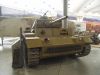
DD Sherman276 viewsDD tanks worked by erecting a 'flotation screen' around the tank, which enabled it to float, and had a propeller powered by the tank's engine to drive them in the water.
The DD tanks were one of the many specialised assault vehicles, collectively known as Hobart's Funnies, devised to support the planned invasion of Europe
PICT1826.JPG
Challenger276 viewsChallenger 2 is an extensive redesign of the Challenger 1. Although the hull and automotive components seem similar, they are of a newer design and build than those of the Challenger 1, and fewer than 5% of components are interchangeable. Challenger 2 replaced Challenger 1 in service with the British Army and is also used by the Royal Army of Oman. It has seen operational service in Bosnia, Kosovo and Iraq.
IMGP0570.JPG
T-26275 viewsThe T-26 together with the BT was the main tank of the Red Army's armored forces during the interwar period. Though nearly obsolete by the beginning of World War II, the T-26 was the most important tank of the Spanish Civil War and played a significant role during the Battle of Lake Khasan in 1938 as well as in the Winter War in 1939–40.
PICT1751.JPG
Pz III275 viewsThe Panzer III was used in the campaigns against Poland, France, the Soviet Union and in North Africa. A handful were still in use in Normandy, Anzio, Norway, Finland and in Operation Market Garden in 1944
PICT1731.JPG
Medium Tank Mk II274 viewsDuring the threat of German invasion of the summer of 1940, some of these outmoded vehicles were reactivated for a short time. No "mobile" Vickers Mediums faced the Italian invasion of Egypt in September 1940, but at least one was dug in as an armoured pillbox in the British defenses at Mersa Matruh at the time of the invasion
PICT1810.JPG
M48274 viewsThe M48 Patton served as an interim tank in U.S. service until replaced by the U.S. Army's first main battle tank (MBT), the M60.
PICT1735.JPG
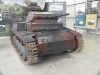
Pz II272 viewsThe Panzer II was supplemented by the Panzer III and IV in 1940/41. Thereafter, it was used to great effect as a reconnaissance tank. By the end of 1942 it had been largely removed from front line service and it was used for training and on secondary fronts. Production of the tank itself ceased by 1943 but its chassis remained in use as the basis of several other armored vehicles, chiefly self-propelled artillery such as the Wespe and Marder II.
270 files on 27 page(s) 1 - 17 18 19 20 21 22 23 24 25 26 27


Visit Madaxeman on

Youtube Logo
Blogger Logo
Facebook Logo
Podbean Logo
Twitter Logo
Spotify Logo
Pinterest Logo
iTunes Logo
Tune In Logo

Podcasts to download from Madaxeman.com

(Also available on Podbean, iTunes and Spotify)


(These are "affiliate links". If you buy something after clicking on them I get a small kickback from eBay)

Page Loads for the 10mm & Museums Gallery:

About This Site & Privacy Information

Powered by Coppermine Photo Gallery